Last Thursday, the telecommunications and banking sectors were jolted awake by a sudden and unexpected event. The services provided by operators were compromised, leaving their customers in a state of uncertainty and disarray.
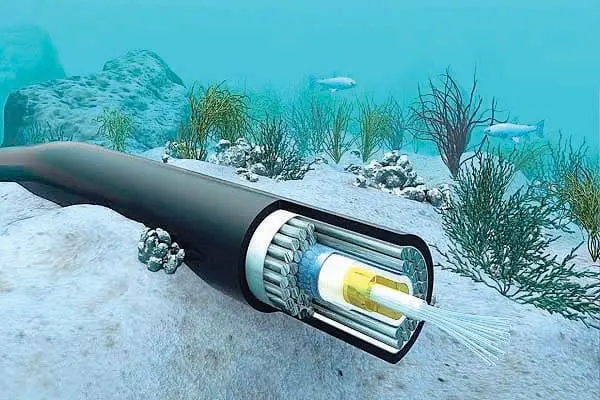
It wasn’t until much later in the day that news began to trickle in about the undersea cable that had been severed, disrupting the data network flow between Europe and Africa somewhere near Cote D’Ivoire in the Atlantic Ocean.
This disruption impacted several key subsea systems along Africa’s western coast, including WACS, ACE, MainOne, and SAT3. As a result, banking and telecommunications services in Nigeria and other African countries were severely disrupted.
Seacom, a prominent South African internet service provider, faced significant challenges and informed its customers about service disruptions through the West African Cable System. Similarly, MainOne, a major internet provider for Nigerian banks and service providers, experienced a significant fiber cut in Ghana, leading to the outage of several major Nigerian banks.
The initial assessments of the damage indicated that it could take at least two weeks or more to fully resolve the issue. This news instilled panic within the telecommunications and banking industries, prompting operators on both sides to quickly implement service rerouting measures.
Despite expectations of a prolonged disruption, services began to gradually recover between Monday and Tuesday. Meanwhile, various African internet service providers affected by the cable cut shared accounts of the challenges and pressures they faced while working to address the problem.
Telecommunications companies in Nigeria, which bore the brunt of the disruption, acknowledged that their engineers worked tirelessly beyond regular hours to minimize the impact of the disruption on services. The Association of Licensed Telecommunications Operators of Nigeria (ALTON) Chairman, Engr Gbenga Adebayo, reassured that service restoration efforts were well underway and disruptions were being addressed.
The Nigerian Communications Commission (NCC) also confirmed the restoration of services, stating that approximately 90 percent of peak utilization capacities had been restored following the disruptions caused by the undersea cable cuts.
MainOne, one of the affected multinational cable companies, swiftly activated its maintenance agreement with the Atlantic Cable Maintenance and Repair Agreement (ACMA) to facilitate the repair of the submarine cable. The process involved identifying the issue, retrieving necessary spares, conducting repairs at the fault location, and ensuring the cable was securely reinstated.
WIOCC, a key player in Africa’s digital infrastructure, played a strategic role in resolving the subsea cable outages. The Group CEO, Chris Wood, highlighted the company’s rapid response and deployment of additional capacity to support network operators and clients during the crisis, emphasizing the resilience and scale of their network infrastructure.
In summary, the incident underscored the importance of robust infrastructure and swift response mechanisms in ensuring the continuity of critical telecommunications and banking services in the face of unexpected disruptions.