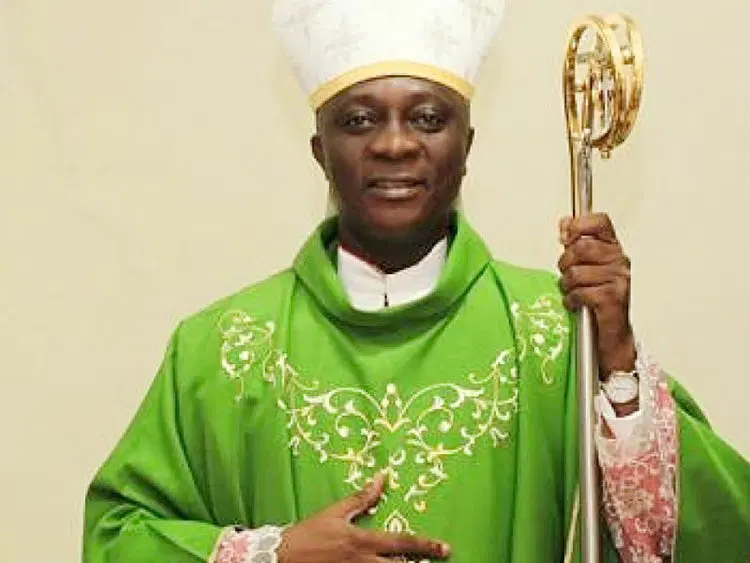
The recent Samoa Agreement has raised significant concerns among the Catholic Bishops Conference of Nigeria (CBCN), with the bishops expressing their deep apprehensions regarding its potential impact on the sovereignty and values of Nigeria. In a detailed 25-point communique issued following their recent meeting and signed by the President, Most Rev. Lucius Iwejuru Ugorji, and the Secretary, Most Rev. Donatus A. Ogun, the CBCN highlighted the purported threats posed by the agreement. They cautioned that despite its seemingly benign facade, the Samoa Agreement is intricately interwoven with post-modern secularistic ideologies that could erode the moral, cultural, and religious beliefs ingrained in Nigerian society.
Emphasizing their role as guardians and advocates for the moral, religious, and cultural well-being of Nigeria, the Catholic Bishops urged a critical examination of the Samoa Document’s implications for the nation’s future and its citizens. They called upon the government to promptly either propose amendments to the agreement or withdraw from it to safeguard Nigeria’s sovereignty and core values. Delving into the legal ramifications, the CBCN underscored that the act of signing a treaty signifies a state’s commitment to uphold its principles and goals, potentially binding it to future ratification and enforcement.
Of particular concern to the CBCN were the references within the Samoa Agreement that elevate concepts such as Sexual Orientation and Gender Identity, Comprehensive Sexuality Education, and Abortion to the status of international law, primarily through the lens of Gender approaches and the notion of Sexual and Reproductive Health and Rights. The bishops noted with caution the absence of a comprehensive glossary in the document, which could lead to discrepancies in interpretation and implementation among the parties involved. By signing the Samoa Agreement, Nigeria inadvertently relinquished its status as a persistent objector to contentious issues discussed in various international forums, thereby diluting its historical stance on matters such as anti-life, anti-family, anti-culture, and anti-African values.
Furthermore, the CBCN highlighted the weighty presence of gender-related language in the agreement, with numerous references aimed at promoting gender equality and mainstreaming gender perspectives across policies. They stressed the transformative nature of the term “gender,” which has evolved to encompass a multitude of gender identities beyond traditional binary distinctions, thus complicating discussions around gender equality. The bishops also raised concerns about provisions that align Nigeria with the European Union on joint positions in international affairs, potentially constraining the country’s ability to assert its distinct African values and interests on the global stage.
Looking ahead, the Catholic Bishops urged the Nigerian government to advocate for a pivotal insertion in both the general Agreement and the African Regional Protocol to explicitly exclude obligations related to sexual orientation, gender identity, comprehensive sexuality education, abortion, contraception, legalization of prostitution, same-sex marriage, or sexual rights for children. They proposed that Nigeria should lead by example in calling for amendments to the Samoa Agreement, with the hope that other nations in the African Caribbean and Pacific regions would follow suit. Ultimately, the CBCN recommended that Nigeria consider withdrawing from the agreement if the proposed Amendment is rejected by the European Union, citing precedent from South Africa’s withdrawal from the Cotonou Agreement in 2023.