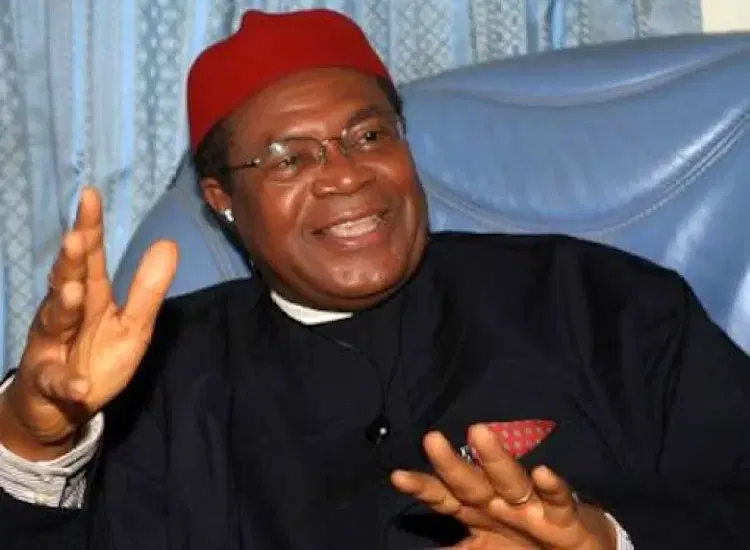
The former national chairman of the People’s Democratic Party (PDP), Dr. Okwesilieze Nwodo, expressed his concerns on Sunday regarding the lack of proper information available to Nigerians about government programs and initiatives. Nwodo, who previously served as the governor of the old Enugu State, emphasized the pressing need for the government to address the significant communication gap that currently exists between those in power and the citizens they govern. He believes that by improving this communication, the government can effectively engage the populace and ensure that the people are included in discussions and decisions that affect their lives.
His comments came shortly after President Bola Tinubu delivered a broadcast addressing the ongoing protests taking place across the country. In light of the President’s address, Nwodo reiterated the importance of ensuring that there is effective monitoring of government programs. This monitoring is crucial to guarantee that these initiatives reach their intended beneficiaries, the citizens of Nigeria. He stressed that it is vital for the federal, state, and local governments to invest significantly in the agricultural sector as a means to combat the rising food inflation that has been affecting the country.
Nwodo remarked, “From all that the president has said, it appears there is a huge communication gap between the government and the governed. I am sure that many Nigerians are hearing about these government efforts for the very first time, including those individuals who should be the primary beneficiaries of these initiatives and programs.” He emphasized that this lack of awareness among citizens is a serious issue that needs to be addressed.
Moreover, he pointed out that if the government is genuinely committed to closing this communication gap, it must simultaneously establish a robust monitoring framework. This framework would ensure that the promises made by the government are actually being fulfilled and delivered to the citizens who need them most. Nwodo highlighted that if one were to ask students whether they have received the promised student loans, or inquire with those running small and medium-sized enterprises (SMEs) about whether they have accessed the various promises made by the government, it would be shocking to discover that very few, if any, have actually benefited from these initiatives.
He went on to state, “Ignorance is the worst disease anywhere. People can resort to extreme actions if they lack the right information, and they often regret their actions once they finally obtain the correct information.” Nwodo firmly believes that citizens have an inherent right to be adequately informed about what their government is doing on their behalf. This right to information is essential for fostering trust and cooperation between the government and the people.
Nwodo further noted, “It is only from this broadcast that one can believe that there is something being done positively regarding the removal of the fuel subsidy. If we are moving from 97% to 68% in the repayment of our loans, that is indeed a commendable improvement. However, it is important to note that nobody has ever heard about this progress before.” He concluded by emphasizing that the government’s efforts need to be communicated effectively to the public. He stressed that ministers have a crucial responsibility to ensure that the people are kept informed about what is happening within their respective ministries, parastatals, and agencies, as this transparency is vital for building a more informed and engaged citizenry.