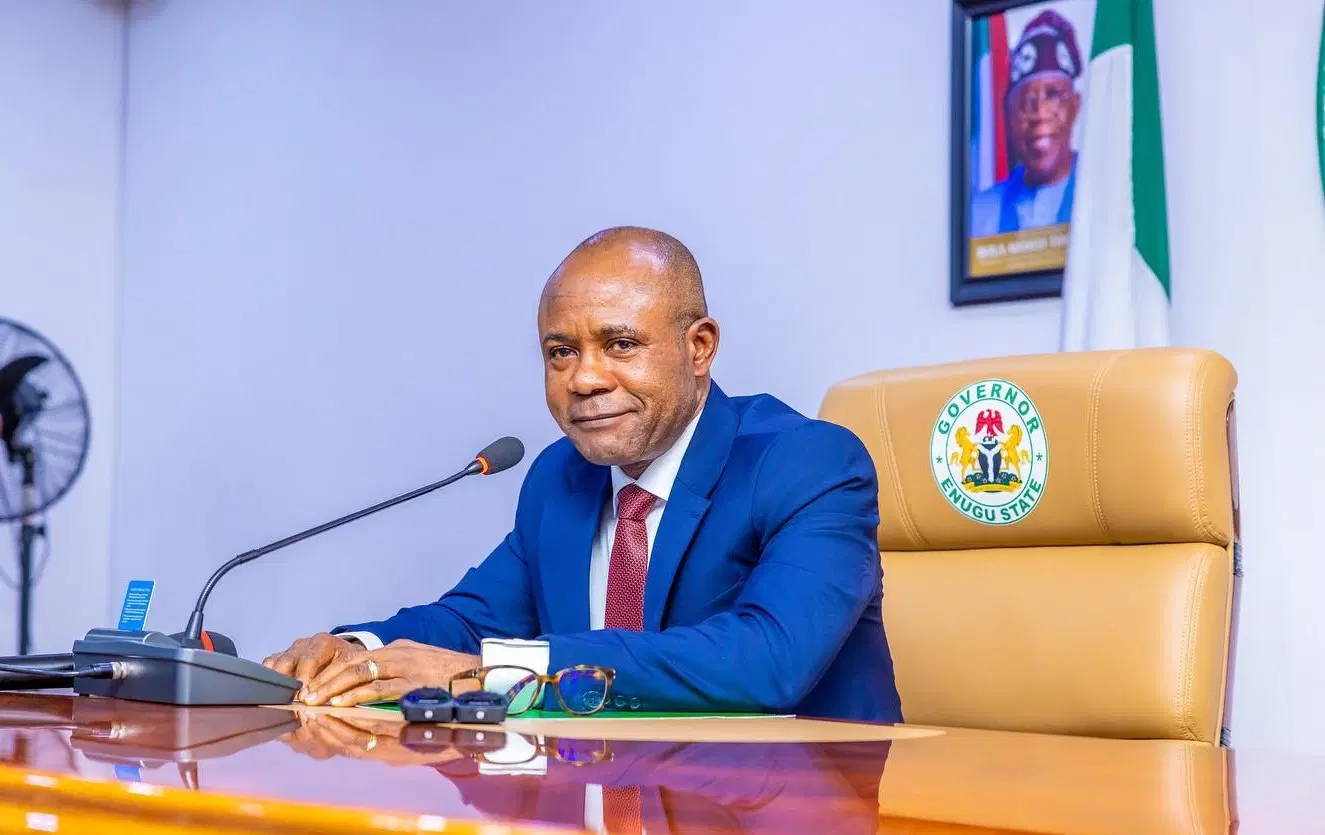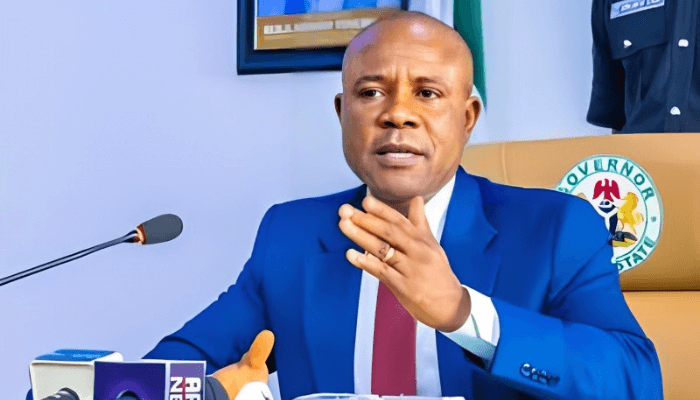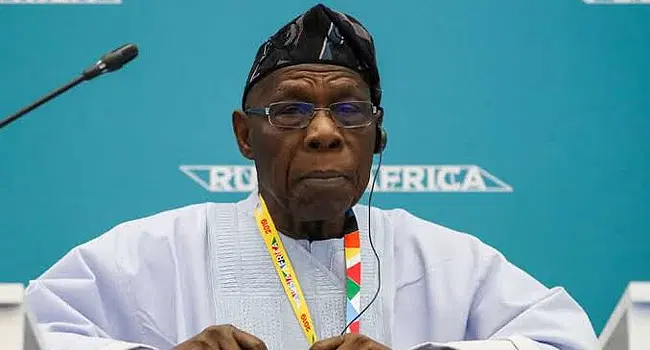
Deputy Spokesperson of the House of Representatives, Hon. Philip Agbese, has taken issue with the recent statements made by former president, Chief Olusegun Obasanjo, regarding the salaries of members of the National Assembly. Agbese firmly contended that the assertion made by Obasanjo that lawmakers fix their own salaries and allowances is not only erroneous but also misrepresents the reality of the current legislative environment.
Agbese expressed his views during a press conference in Abuja on Sunday as he responded to Obasanjo’s comments, which suggested that it is unethical for members of the House to determine their own remuneration. The former President stated, “You are not supposed to fix your salaries or allowances; it is supposed to be done by the Revenue Mobilisation and Fiscal Responsibility Commission.” He emphasized, with all due respect, that it’s fundamentally wrong for lawmakers to determine their own pay, highlighting his belief that it is immoral for any individual to have the power to set their own salary. He further noted, “it is not right for me to be the one to determine what I pay myself; it is immoral, and you are doing it; the Senate is doing it.”
In response, Agbese countered these assertions by emphasizing that the 10th House of Representatives operates under a completely different framework and context compared to Obasanjo’s administration. He argued that the current representatives are working diligently to uphold principles of accountability and transparency under the leadership of Speaker Tajudeen Abbas. “The former president is always right and wrong because the 10th House of Reps is totally different from his era,” Agbese stated, indicating that Obasanjo’s reflections on the previous Legislative Assembly should not be imposed on the present circumstances without consideration for changes that have taken place over time.
Agbese noted that Obasanjo’s critique fails to recognize the substantial advancements that have been made by the current representatives appointed to serve the interests of their constituents. He remarked, “As a parliament, we have strived to maintain the highest level of accountability and transparency in all that we do under Speaker Tajudeen Abass. I am bold to say that the very respected former president is right and wrong because of the things that transpired between him and the National Assembly during his time as president.”
He elaborated on the complexities of the past, suggesting that stories exist regarding Obasanjo’s helplessness during his presidency when it came to navigating the dynamics of the National Assembly. He pointed out that such issues are no longer pertinent, as the current representatives have made significant strides in addressing the needs and concerns of ordinary Nigerians. “Quite a lot has been done by the current crop of representatives to deliver to the poor masses,” Agbese confirmed, suggesting that their efforts are a testament to their commitment to public service.
Furthermore, Agbese asserted that no one could be more committed to the welfare of the Nigerian people than the present Speaker of the House of Representatives. Under Speaker Abbas’s guidance, Agbese stated, “We mean what we say, and everything that we do as a parliament. The era of narrow interest is over. We are here for our people and their collective interests.” This underscores the shift in focus toward the welfare of the populace rather than individual or political gain.
On the contentious topic of the alleged N100 million and N200 million payments purportedly given to members of the National Assembly, Agbese straightforwardly denied that such transactions occurred under the current administration led by President Bola Tinubu. He categorically stated that no such funds have been disbursed and emphasized that Tinubu’s presidency represents a significant departure from the leadership styles of past administrations. Agbese pointed out that Tinubu has garnered support through careful diplomacy and consultation, which stands in contrast to previous controversies.
Agbese further elaborated on the qualities of President Tinubu, indicating that he embodies the principles of collaboration and partnership in governance. He believes that Obasanjo should shift his focus to more traditional media platforms and stop giving credence to social media rumors and misinformation.
“We know what Tinubu wants for Nigeria, and supporting the President to deliver on the Renewed Hope Agenda is the best for the country. The Speaker has been largely accountable to the people and has remained a torchbearer of the parliament, working tirelessly to uphold the integrity of the institution,” he stressed. Agbese asserted that Speaker Abbas has earned the respect of his fellow lawmakers not solely because he is perceived as a kind and God-fearing individual, but also due to his daily commitment to excellence in his role as a leader.
He continued to extol Abbas’s virtues by declaring him an apostle of due process, highlighting how he has exemplified leadership grounded in accountability and probity at every level. This serves as a stark contrast to past practices, suggesting a new era of transparency and responsibility within the National Assembly.
Agbese did not shy away from discussing the past allegations connected to Obasanjo’s presidency, suggesting that the former leader himself attempted, albeit unsuccessfully, to bribe members of the National Assembly in order to foster support for initiatives that were not in line with the Constitution. According to Agbese, such attempts reveal that while there may have been some individuals who were willing to compromise, the greater majority of parliamentarians during that time remained committed to their principles and the welfare of their nation.
“This alone shows that apart from the few bad eggs that the former President had in the parliament as collaborators, the majority were still men and women of good conscience who could not sell their country for a pot of porridge,” he asserted. He contrasted this with President Tinubu’s approach, stating that the current administration leads by example, particularly in avoiding undue influence over leadership changes in the Senate or House of Representatives.
Agbese highlighted that such differences have elicited envy from former leaders who may be discontent with the harmonious working relationship between Speaker Abbas and President Tinubu. “They are not happy that Abbas is not like Ghali Na’Abba, and the President is making progress to salvage the situation,” he remarked, suggesting that the partnerships formed today are more robust and aligned with public interest.
Additionally, Agbese juxtaposed current Senate President, Goodwill Akpabio, with former Senate Presidents like Adolphus Wabara and Evans Enwerem, both of whom faced impeachment during Obasanjo’s administration, pointing out that Akpabio represents a different style of leadership that prioritizes stability and cooperation.
Obasanjo, in his media chat, had claimed that lawmakers independently determined their allowances and salaries, including various benefits such as paper allowances, shift allowances, and seating allowances. Agbese responded to this assertion, clarifying that such allegations do not reflect the reality of the current legislative framework. He concluded by reinforcing the need for accurate dialogue around these issues rather than relying on unfounded claims that misrepresent the ongoing efforts of the current legislature.