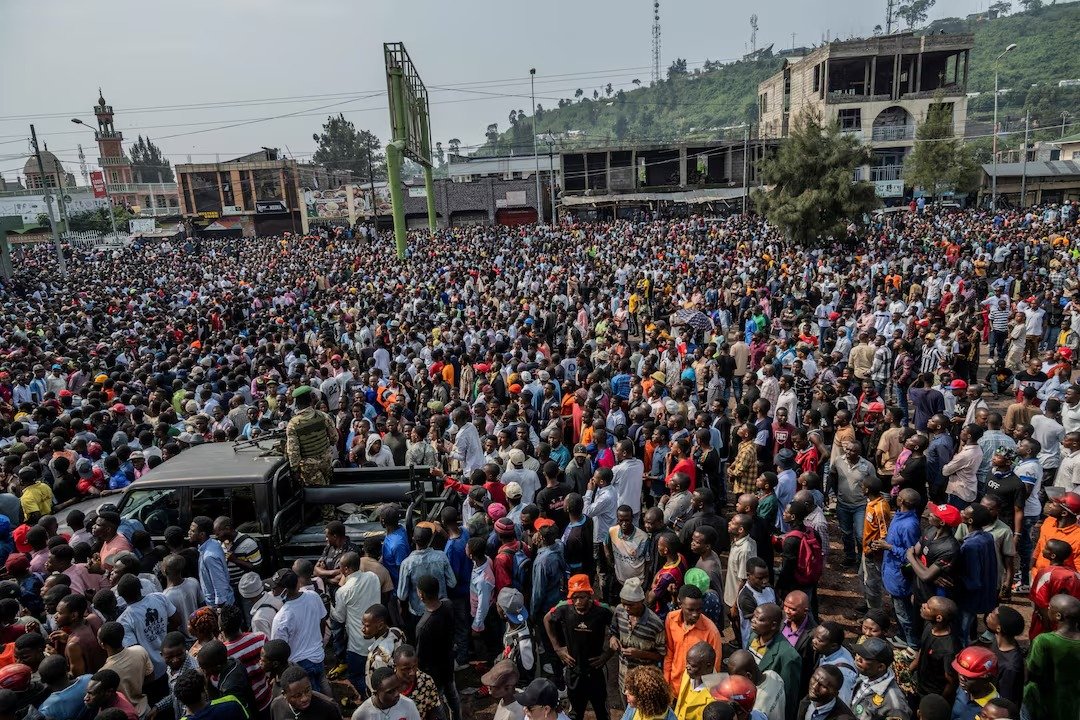
Escalation of the ongoing conflict in the Democratic Republic of Congo (DRC), M23 rebels have seized control of Goma, the largest city in the eastern region, and are advancing toward Bukavu. The situation has plunged the country into deeper chaos, with thousands reported dead, hospitals overwhelmed, and harrowing accounts of mass rape and slavery emerging from the war-torn area.
The fall of Goma marks a significant turning point in the conflict, which has long been fueled by the region’s vast mineral wealth, including gold, coltan, and tin. These resources have made eastern Congo a hotspot for both local and international exploitation, with neighboring Rwanda allegedly playing a central role in the current crisis.
A Humanitarian Catastrophe Unfolds**
The humanitarian toll of the conflict is staggering. Civilians are bearing the brunt of the violence, with reports of widespread atrocities surfacing. Hospitals in Goma and surrounding areas are struggling to cope with the influx of wounded, while displaced populations face dire conditions. The United Nations and other international organizations have raised alarms about the deteriorating situation, but aid efforts are hampered by the ongoing fighting.
Reports of mass rape and enslavement have further underscored the brutality of the conflict. Human rights groups are calling for immediate action to protect vulnerable populations and hold perpetrators accountable. The International Criminal Court (ICC) has signaled its vigilance, warning that it is monitoring the situation for potential war crimes.
Failed Peace Talks and Regional Tensions**
Efforts to broker peace have so far yielded little progress. Congolese President Félix Tshisekedi and Rwandan President Paul Kagame recently met in Tanzania to discuss a potential resolution, but past attempts at negotiation have repeatedly collapsed. The involvement of Rwanda in the conflict has been a point of contention, with the DRC accusing its neighbor of backing the M23 rebels—a claim Rwanda denies.
The United States has issued warnings of potential sanctions against those fueling the conflict, but it remains unclear whether such measures will be enough to deter the escalating violence. The international community faces mounting pressure to intervene, but the complexity of the conflict, driven by both political and economic interests, poses significant challenges.
A Battle for Resources**
At its core, the conflict in eastern Congo is a battle for control over the region’s lucrative natural resources. The area is rich in minerals essential for modern technology, including coltan, which is used in smartphones and other electronics. The exploitation of these resources has long been a source of instability, with armed groups and foreign actors vying for control.
The M23 rebellion, which first emerged in 2012, has re-emerged as a formidable force, exacerbating the crisis. Analysts warn that the current conflict is not merely another rebel uprising but a full-scale war with far-reaching implications for the region and beyond.
What’s Next?**
As the situation continues to deteriorate, the international community faces a critical test of its ability to respond to complex crises. The people of Congo, meanwhile, are left to endure the devastating consequences of a conflict that shows no signs of abating.
Without a concerted effort to address the root causes of the violence—including the illicit trade in minerals and the involvement of external actors—the cycle of conflict in eastern Congo is likely to persist. For now, the seizure of Goma serves as a grim reminder of the high stakes and the urgent need for action.