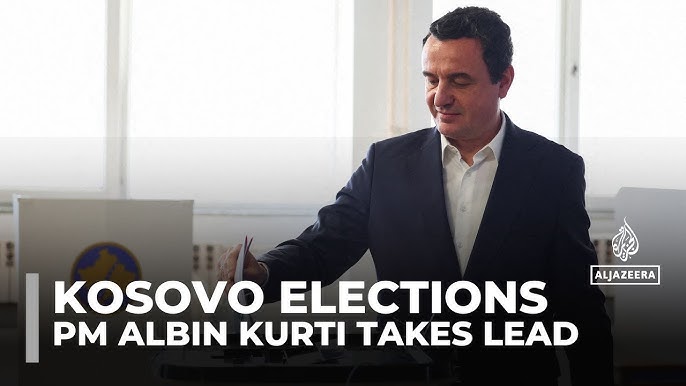
Kosovo, a small yet strategically significant country in southeastern Europe, has been at the center of geopolitical tensions since it declared independence from Serbia in 2008. Despite its independence, Serbia—backed by its ally Russia—refuses to recognize Kosovo as a sovereign state. This ongoing dispute has kept the region in a delicate balance, making Kosovo’s recent election a pivotal event with far-reaching implications.
The election pits Lumir Abdixhiku of the Democratic League of Kosovo (LDK) against the current Prime Minister, Albin Kurti. Abdixhiku, who narrowly lost the 2021 election, is vying to reclaim power for his party. Meanwhile, Kurti, a staunch nationalist, has been a vocal opponent of Serbian influence in Kosovo, advocating for stronger sovereignty and self-determination.
The outcome of this election could have significant consequences, not just for Kosovo but for the broader region and beyond. With NATO troops stationed in Kosovo to maintain stability and tensions between Kosovo and Serbia still simmering, the election results could influence European security, U.S. foreign policy, and even the dynamics of Russia’s involvement in the Balkans.
For Europe, a shift in Kosovo’s leadership could either ease or exacerbate tensions with Serbia, potentially impacting the European Union’s efforts to mediate between the two nations. For the United States, Kosovo has long been a key ally in the region, and the election could shape future diplomatic and military engagements. Meanwhile, Russia, which supports Serbia’s claim over Kosovo, is closely watching the election, as it could affect Moscow’s strategic interests in southeastern Europe.
In a world where global politics are increasingly interconnected, Kosovo’s election serves as a reminder that even smaller, less-publicized nations can play a critical role in shaping international relations. As voters cast their ballots, the results will not only determine Kosovo’s domestic future but also ripple across the globe, influencing alliances, security, and the ongoing struggle for sovereignty in the Balkans.