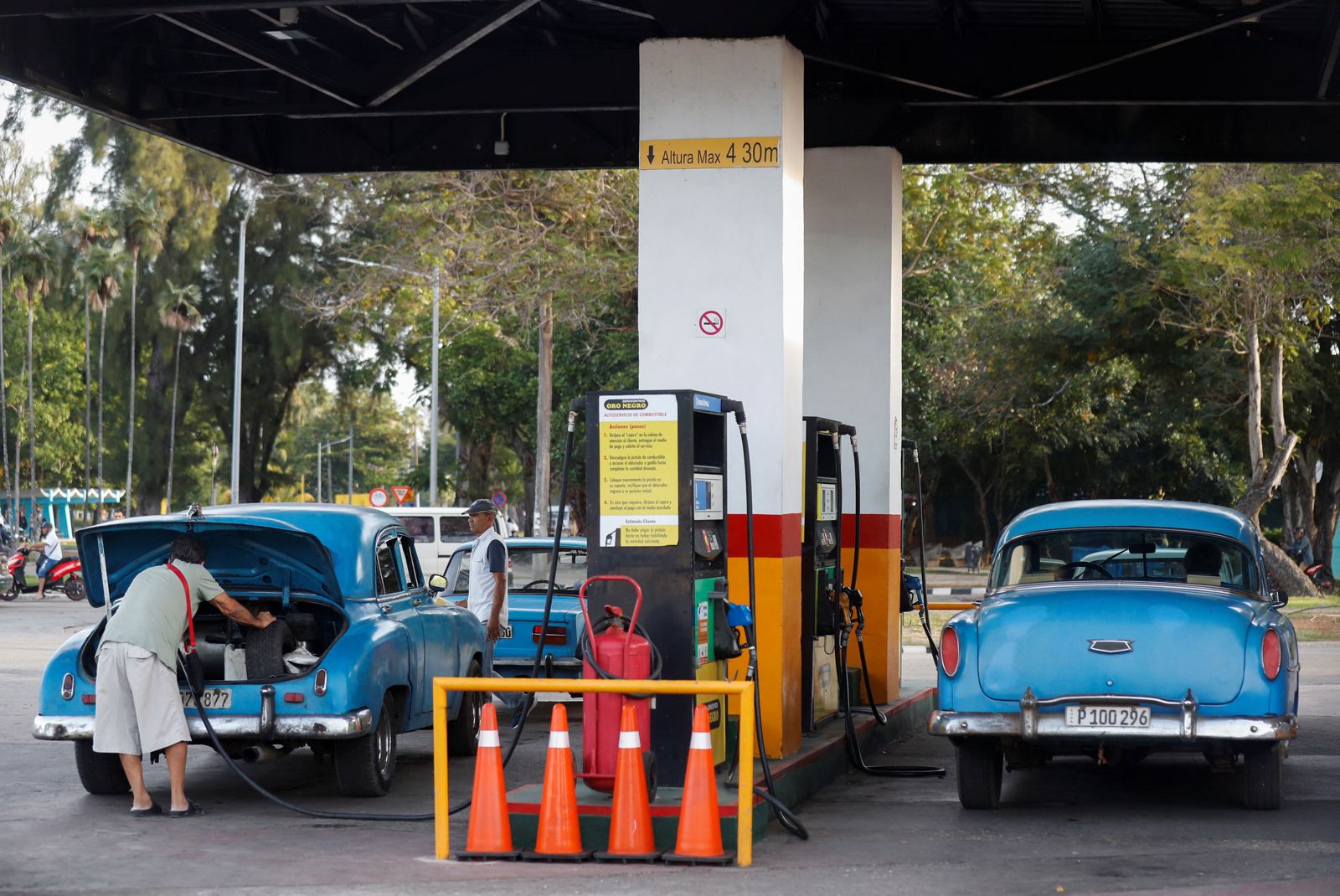
Cuba has announced that high-octane gasoline will now be sold exclusively in U.S. dollars. This move marks the first time a basic necessity has been restricted to foreign currency, signaling a deepening economic transformation on the island. The decision, driven by U.S. sanctions and ongoing supply challenges, has left many Cubans struggling to adapt in a country where access to dollars is limited and there is no formal exchange market.
A New Era of Dollarization
Cuba has long sold premium goods and services in foreign currencies, primarily targeting tourists and those with access to dollars. However, the decision to restrict high-octane gasoline—a product essential for many vehicles and industries—to U.S. dollars represents a significant escalation in the country’s reliance on foreign currency. This move underscores the severity of Cuba’s economic crisis, which has been exacerbated by decades of U.S. sanctions, the COVID-19 pandemic, and internal inefficiencies.
The Cuban government has cited U.S. sanctions and supply chain disruptions as the primary reasons for the change. By selling high-octane gasoline in dollars, the state aims to secure much-needed foreign currency to import fuel and other critical goods. Meanwhile, state-owned vehicles will transition to using regular fuel, which remains available in the local currency, the Cuban peso (CUP).
Impact on Cuban Residents
For ordinary Cubans, the shift to dollar-only sales of high-octane gasoline poses significant challenges. Access to U.S. dollars is limited, particularly for those without family members abroad or connections to the tourism industry. The lack of a formal exchange market further complicates matters, as individuals must rely on informal channels to obtain foreign currency, often at unfavorable rates.
The move has sparked concerns about growing inequality, as those with access to dollars will be able to purchase high-octane fuel, while others may be forced to rely on lower-quality alternatives or reduce their use of vehicles altogether. This could have ripple effects across the economy, impacting transportation, agriculture, and other sectors that depend on reliable fuel supplies.
Broader Implications for Cuba’s Economy
The decision to dollarize high-octane gasoline sales is part of a broader trend toward economic liberalization in Cuba. In recent years, the government has taken steps to open up the economy, including allowing small private businesses and expanding the use of foreign currency. However, these measures have also highlighted the country’s reliance on external sources of income, particularly remittances from Cubans living abroad.
While dollarization may provide short-term relief by generating foreign currency, it also raises questions about the long-term sustainability of Cuba’s economic model. Critics argue that the growing dependence on the U.S. dollar could undermine the value of the Cuban peso and deepen economic disparities. Additionally, the move could further strain relations with the United States, which has maintained a trade embargo on Cuba for over six decades.
Looking Ahead
As Cuba continues to navigate its economic challenges, the decision to restrict high-octane gasoline sales to U.S. dollars highlights the difficult trade-offs facing the government. While the move may help address immediate supply shortages, it also underscores the need for broader economic reforms to create a more stable and equitable system.
For now, the shift toward dollarization is likely to remain a contentious issue, with significant implications for both the Cuban economy and its citizens. As the country grapples with these changes, the international community will be watching closely to see how Cuba balances its economic needs with the realities of life under U.S. sanctions.