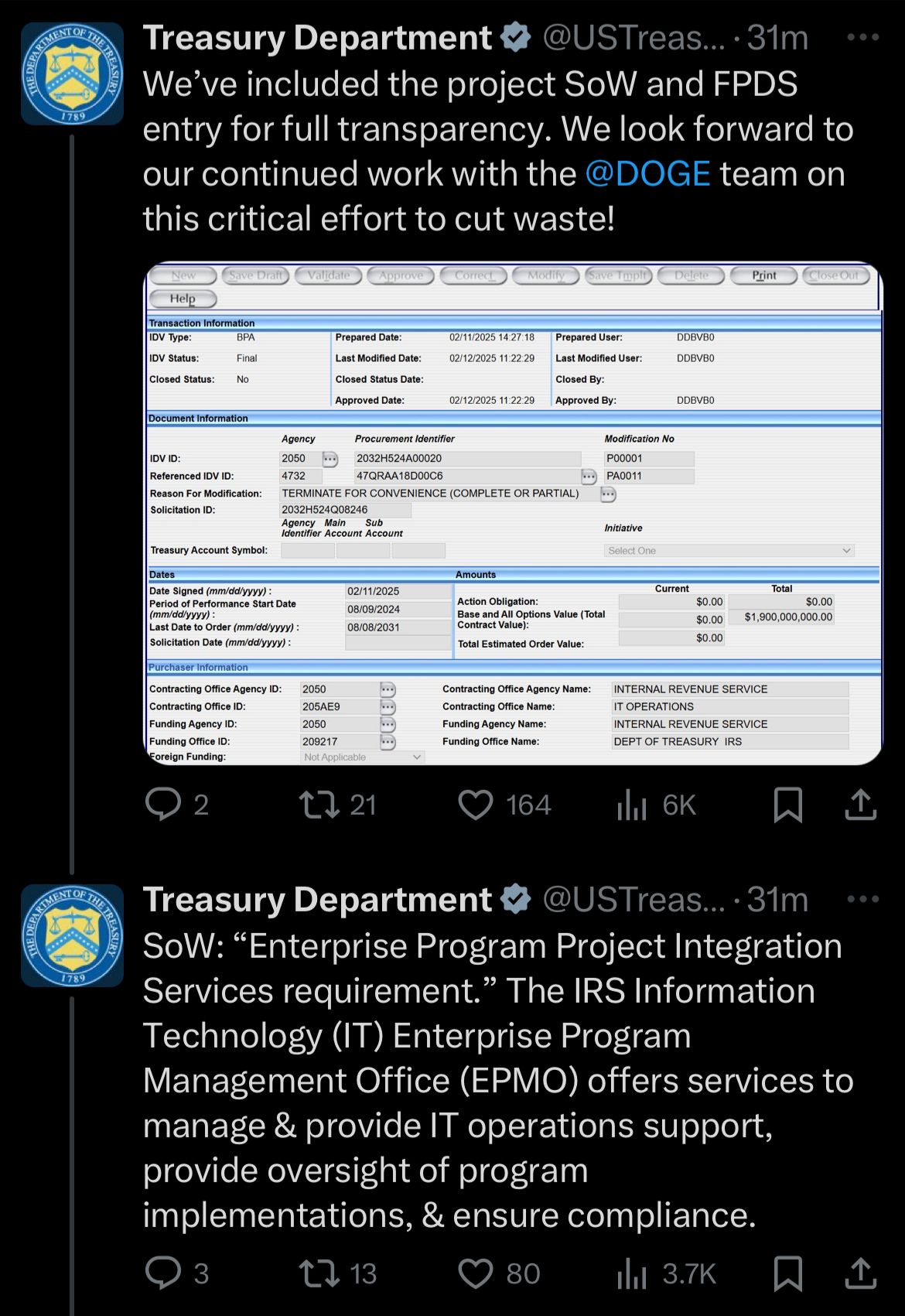
A review conducted by DOGE (Digital Oversight and Government Efficiency) has exposed a questionable $1.9 billion IRS contract, leading to its immediate cancellation. The U.S. Treasury Department, in an unprecedented move, has publicly shared the details of the contract in the name of transparency, marking a significant step toward accountability in government spending.
The contract in question was labeled as “Enterprise Program Integration Services,” a term that appears to be bureaucratic jargon for what essentially amounts to standard IT management. Despite the seemingly routine nature of the services, the contract carried an eye-popping price tag of $1.9 billion, raising serious concerns about wasteful spending and potential mismanagement.
The U.S. Treasury Department released a statement addressing the issue, stating, “We have been working diligently to identify waste, fraud, and abuse within government contracts. This cancellation reflects our commitment to ensuring taxpayer dollars are used responsibly and efficiently.”
The discovery by DOGE highlights the growing importance of independent oversight in government operations. By scrutinizing contracts and expenditures that might otherwise go unnoticed, organizations like DOGE play a critical role in holding institutions accountable and promoting fiscal responsibility.
The termination of this contract is likely to spark broader discussions about government spending practices, particularly in the realm of IT services, where costs can often balloon without clear justification. Critics have long argued that government contracts are prone to inefficiency and lack sufficient oversight, and this case serves as a stark reminder of the need for continued vigilance.
As the Treasury Department continues its efforts to root out wasteful spending, the public sharing of contract details sets a new standard for transparency. This move not only builds trust with taxpayers but also sends a clear message that accountability will remain a top priority.
The DOGE review and subsequent contract cancellation underscore the power of transparency and oversight in ensuring that government resources are used effectively. As more details emerge, this case may serve as a catalyst for further reforms in how government contracts are awarded and managed.