It is a well-known fact by now that the Igbo people, particularly those residing in the five states of the South-East, chose not to participate in the End Bad Governance protest that initiated in various parts of Nigeria on August 1. This widespread decision has sparked considerable discussion and analysis regarding not only the reasons behind this lack of participation but also the potential implications this choice holds for the broader political climate in the country as a whole.
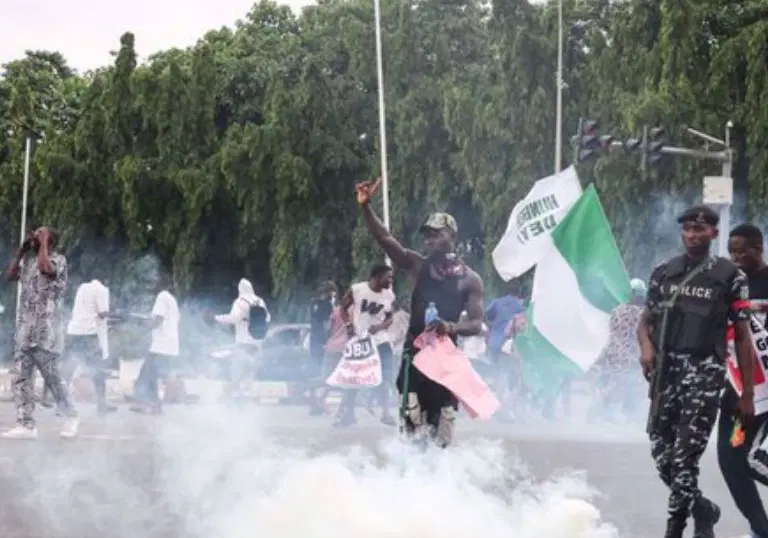
As protests erupted across numerous states, with passionate demonstrators expressing their discontent and grievances over issues such as bad governance, hunger, and the general hardship faced by citizens, the scene was drastically different in the South-East. While elsewhere, angry protesters flooded the streets, forcing their outrage into the public sphere for over five days, significant unrest unfolded in the North, where chaotic events escalated into riots, looting shops and business centers, compelling numerous states to implement curfews as a preventive measure against the ensuing disorder. In stark contrast, the South-East remained eerily quiet, leading many observers to question whether the region, along with the Igbo people, is somehow shielded or insulated from the economic downturn that has affected the rest of the nation.
Chief Peter Ameh, a former presidential candidate and the national secretary of the Coalition of United Political Parties (CUPP), provided insights into this phenomenon. He suggested that the “absence of equity, justice, and fairness” is the primary factor underlying the political apathy displayed by the Igbo towards the Nigerian project and the public protests. He explained that the ongoing and unfair scapegoating of the Igbo ethnic group within Nigeria significantly contributes to their decision to refrain from participating in the nationwide protests.
Ameh elaborated further, stating that the failures associated with the implementation of General Yakubu Gowon’s Reconstruction, Reconciliation, and Rehabilitation program are pivotal catalysts that have fostered a growing sense of disconnection and lack of commitment among the Igbo people, both within Nigeria and in the diaspora, regarding many government initiatives. He directly linked the Igbo’s decision to boycott these protests to what he described as the marginalization of the Igbo people in critical economic and administrative roles under the administrations of the All Progressives Congress (APC). Moreover, he pointed to acts of tribal exclusion coupled with political bias as contributing factors.
He further emphasized that a fundamental reason for the unanimous choice of the entire South-East geopolitical zone to abstain from the ongoing #EndBadGovernanceInNigeria protests stems from the patterns of targeting lives and property of Igbo individuals during any uprisings or public demonstrations across Nigeria. This historical precedent has instilled a fear that makes the Igbo hesitant to participate, as they have often been the recipients of violence and backlash during such events.
Igbo elders also voiced their perspectives, resonating with Chief Ameh’s sentiments. Professor Obasi Igwe, the Director of Media and Publicity for the United Igbo Elders Council (UNIEC), explained that the decision by the Igbo to show disinterest in the protests was not rooted in ignorance of the existence of bad governance; rather, it stemmed from a recognition that the very individuals suffering under bad governance have historically not condemned the persistent isolation and violence faced by the Igbo people, as well as certain Middle Belters and Hausa.
He remarked that the Igbo people felt a differential treatment regarding human rights, which the protest organizers appeared to have directed primarily towards non-Igbo groups. This has significantly influenced their reluctance to engage fully in the protests. The hesitance among the Igbo also arises from past experiences, where accusations were often directed at them, blaming them for the uprisings or protests, which could invariably lead to repercussions against the Igbo community itself.
In his analysis, Professor Igwe underscored that the Easterners generally prefer to assess the seriousness of any movement before committing to it. He emphasized that there is a collective desire among the Igbo to pursue the salvation of everyone based on shared civilizational principles, rather than engaging in transient coalitions that could compromise their long-term interests or lead to no substantial advancements.
The professor expressed suspicion regarding the organization of the protests, articulating concerns about protesting against oppressors while simultaneously negotiating terms with them on how, where, and when to assemble. He critiqued the idea of presenting grievances within secluded spaces, where dialogue would occur amongst themselves rather than addressing the systemic issues plaguing society, all while life and governance continue to deteriorate outside those confines.
He pointed out another irony: that during