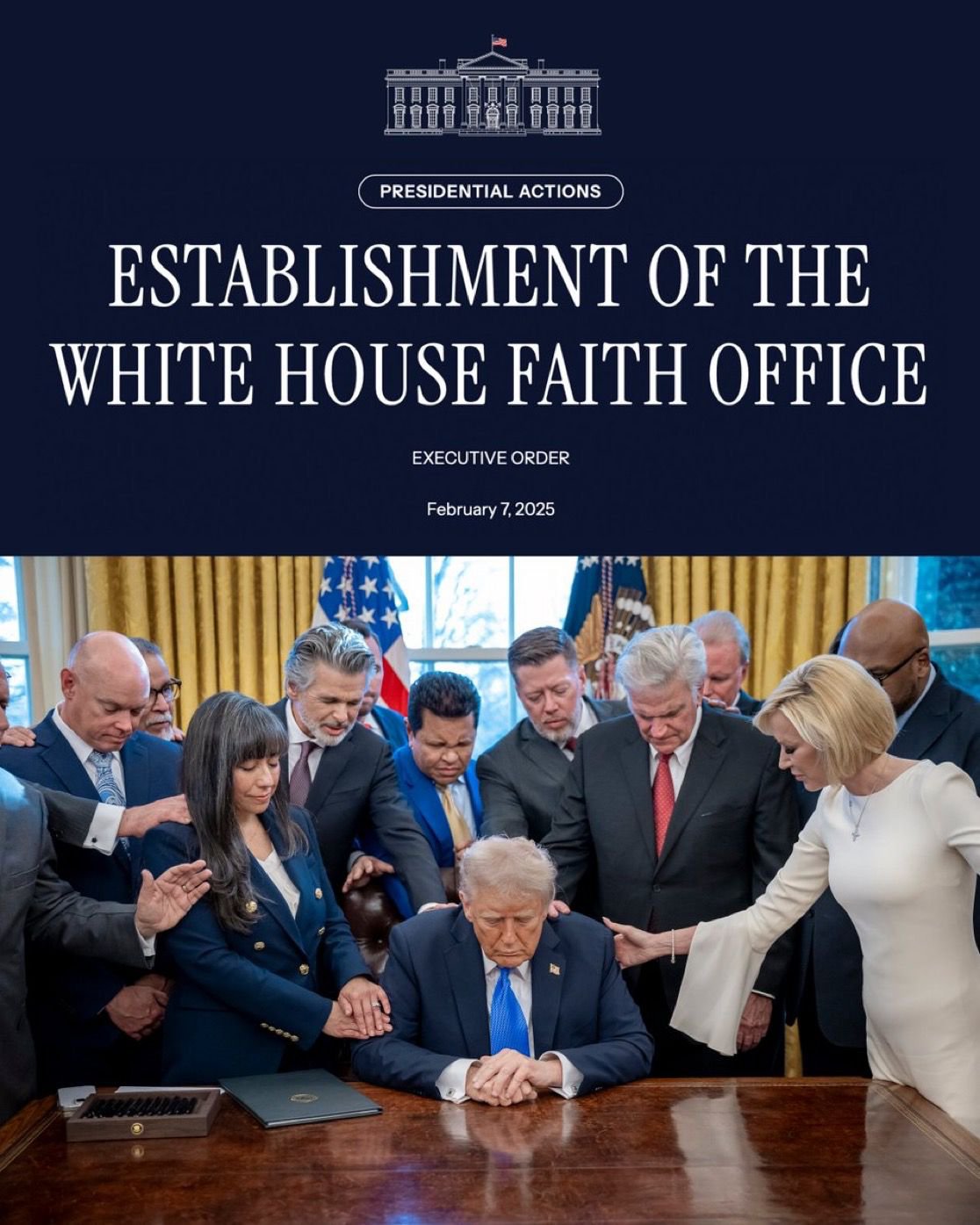
In a significant move aimed at bolstering the administration’s ties with religious communities, former President Donald Trump signed an executive order to establish the White House Faith Office. This new office is designed to strengthen partnerships with faith-based organizations, expand protections for religious liberty, and enhance engagement with religious groups nationwide.
The creation of the White House Faith Office underscores the administration’s commitment to supporting faith-based initiatives and ensuring that religious organizations play a central role in addressing community needs. The office is expected to serve as a bridge between the federal government and religious communities, fostering collaboration on issues such as social services, education, and humanitarian efforts.
One of the key objectives of the office is to expand protections for religious liberty, a cornerstone of Trump’s policy agenda. By doing so, the administration aims to safeguard the rights of individuals and organizations to practice their faith freely, without undue interference from government entities. This move aligns with Trump’s broader efforts to prioritize religious freedom both domestically and internationally.
Additionally, the White House Faith Office will work to increase engagement with religious organizations across the country, ensuring that their voices are heard in policy discussions and that they have access to resources to support their initiatives. This includes facilitating partnerships between faith-based groups and federal agencies to address pressing social issues, such as poverty, addiction, and homelessness.
The establishment of the office has been met with mixed reactions. Supporters argue that it recognizes the vital role religious communities play in American society and provides a platform for their contributions to be amplified. Critics, however, express concerns about the potential for blurring the lines between church and state, emphasizing the importance of maintaining a clear separation to uphold constitutional principles.
Regardless of the debate, the White House Faith Office represents a significant step in the Trump administration’s efforts to prioritize faith-based initiatives and religious liberty. By fostering stronger ties with religious communities, the office aims to empower these groups to continue their work in serving their communities and advancing shared goals.