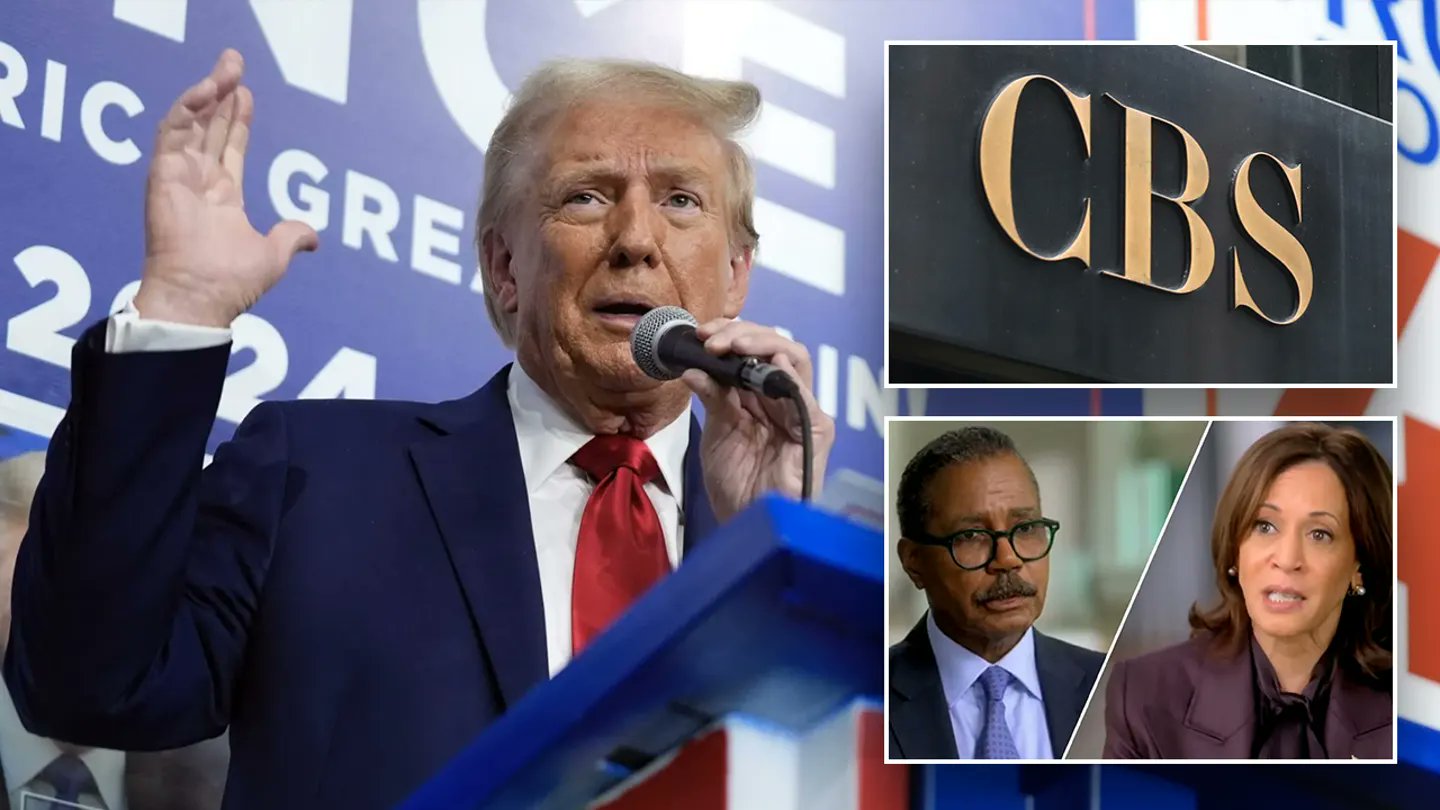
President Donald Trump has expanded his lawsuit against CBS, now including Paramount Global and Representative Ronny Jackson, following the release of unedited footage from a *60 Minutes* interview with Vice President Kamala Harris. The lawsuit alleges significant media manipulation after the raw transcript, released under pressure from the Federal Communications Commission (FCC), revealed that CBS edited Harris’s responses to make her appear more coherent and articulate.
The controversy stems from an interview with Harris that aired on *60 Minutes*, where her answers were heavily edited to remove what critics have described as “word salad”—rambling and disjointed responses. The unedited transcript, which was made public after the FCC intervened, shows that CBS selectively cut portions of the interview to present a more polished version of Harris’s remarks. This has raised questions about journalistic integrity and whether CBS violated FCC rules regarding “news distortion.”
FCC Commissioner Brendan Carr has taken a keen interest in the matter, stating that CBS’s actions are “hard to explain” and warrant further investigation. Carr emphasized the importance of transparency in news reporting, particularly when it involves high-profile political figures. “The public has a right to know when media outlets are manipulating content to fit a narrative,” Carr said in a statement. His comments have added fuel to the ongoing debate about media bias and the role of news organizations in shaping public perception.
Trump’s legal team argues that the editing of the interview was a deliberate attempt to mislead viewers and bolster Harris’s image. By including Paramount Global, CBS’s parent company, and Representative Ronny Jackson, a vocal critic of the Biden administration, the lawsuit seeks to hold a broader range of entities accountable for what it describes as a coordinated effort to distort the truth.
CBS has yet to issue a formal response to the expanded lawsuit, but the network has previously defended its editorial decisions, stating that editing is a standard practice in journalism to ensure clarity and conciseness. However, critics argue that in this case, the editing crossed a line by fundamentally altering the substance of Harris’s responses.
The lawsuit has reignited discussions about the role of media in political discourse and the extent to which news organizations should be held accountable for their editorial choices. As the case progresses, it could set a precedent for how media outlets handle interviews and the transparency they are required to maintain.
For now, the release of the unedited transcript has provided ammunition for Trump and his allies, who have long accused mainstream media of bias against conservative figures. The outcome of the lawsuit and the FCC’s investigation could have far-reaching implications for the media landscape, potentially leading to stricter regulations on how news is reported and edited.
As the legal battle unfolds, one thing is clear: the controversy over Kamala Harris’s *60 Minutes* interview has become a flashpoint in the ongoing debate over media credibility and the public’s right to unfiltered information.