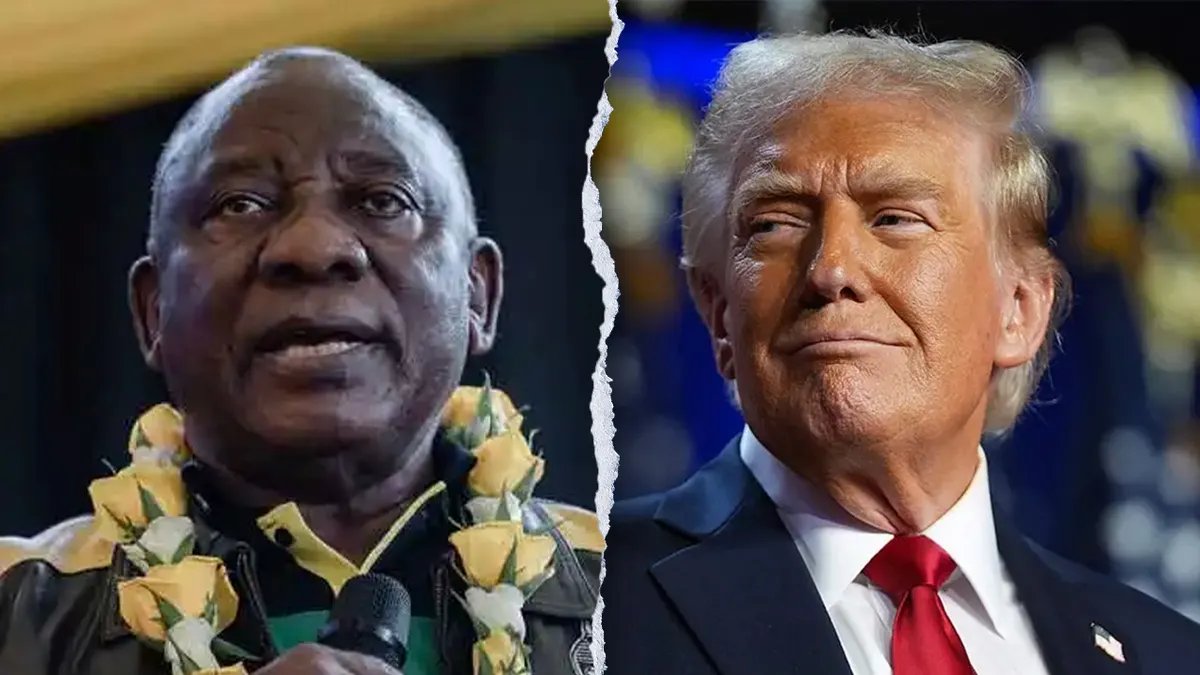
Donald Trump has announced the suspension of American aid to South Africa in response to the country’s land reform policies. The decision comes amid growing tensions over South Africa’s land expropriation law, which permits the seizure of land without compensation. Alongside the aid freeze, the Trump administration has proposed a plan to resettle white Afrikaner farmers—descendants of Dutch and French settlers—as refugees in the United States.
The land reform law, enacted by the South African government, aims to address historical inequalities stemming from the apartheid era, during which the majority Black population was systematically dispossessed of land. South African leaders have defended the policy as a necessary step toward rectifying decades of racial injustice and ensuring equitable land distribution. However, critics, including Trump, argue that the law violates property rights and undermines economic stability.
Trump’s decision to freeze aid has drawn sharp criticism from South African officials, who view the move as an unwarranted intervention in their domestic affairs. The offer to resettle Afrikaner farmers has also been met with resistance, with South African leaders rejecting the proposal outright. They argue that the resettlement plan is unnecessary and dismiss claims that white farmers face widespread persecution in the country.
The Trump administration’s stance has sparked a broader debate about the legacy of colonialism and apartheid, as well as the role of international actors in addressing historical injustices. Supporters of the land reform policy argue that it is a crucial step toward achieving social and economic justice in South Africa. Meanwhile, opponents warn that the policy could deter foreign investment and exacerbate economic challenges in a country already grappling with high unemployment and inequality.
The resettlement proposal for Afrikaner farmers has also raised questions about the criteria for refugee status and the motivations behind the plan. While some view it as a humanitarian gesture, others see it as a politically charged move that could further polarize discussions around race and land ownership in South Africa.
As the debate continues, the suspension of U.S. aid underscores the complex and often contentious relationship between domestic policies and international diplomacy. South Africa’s land reform efforts remain a deeply divisive issue, with implications for the country’s future and its place on the global stage.